
The Competitive Edge IV Drip: What's Inside NextGEN's Athlete Recovery Infusion in Baltimore
The Competitive Edge IV Drip: What's Inside NextGEN's Athlete Recovery Infusion in Baltimore
Hard training breaks you down on purpose. The work that makes you faster or stronger also drains fluid, burns through electrolytes, and loads your tissues with metabolic stress. How quickly you bounce back decides how hard you can go next time. That recovery window is what NextGEN's Competitive Edge IV is built around.
The Competitive Edge is a $300 infusion of electrolytes, vitamin B12, B-complex vitamins, and glutathione, delivered at our outpatient center at 9920 Franklin Square Dr in Nottingham, MD, just outside Baltimore. It's marketed for muscle recovery, endurance, and performance. Below is the honest version of what's in it, what each ingredient is actually doing, and one rule every competing athlete needs to know before booking. As a
Brodsky Hematology affiliate with physician-led oversight, we'd rather tell you the real story than sell you a miracle.
What is the Competitive Edge IV?
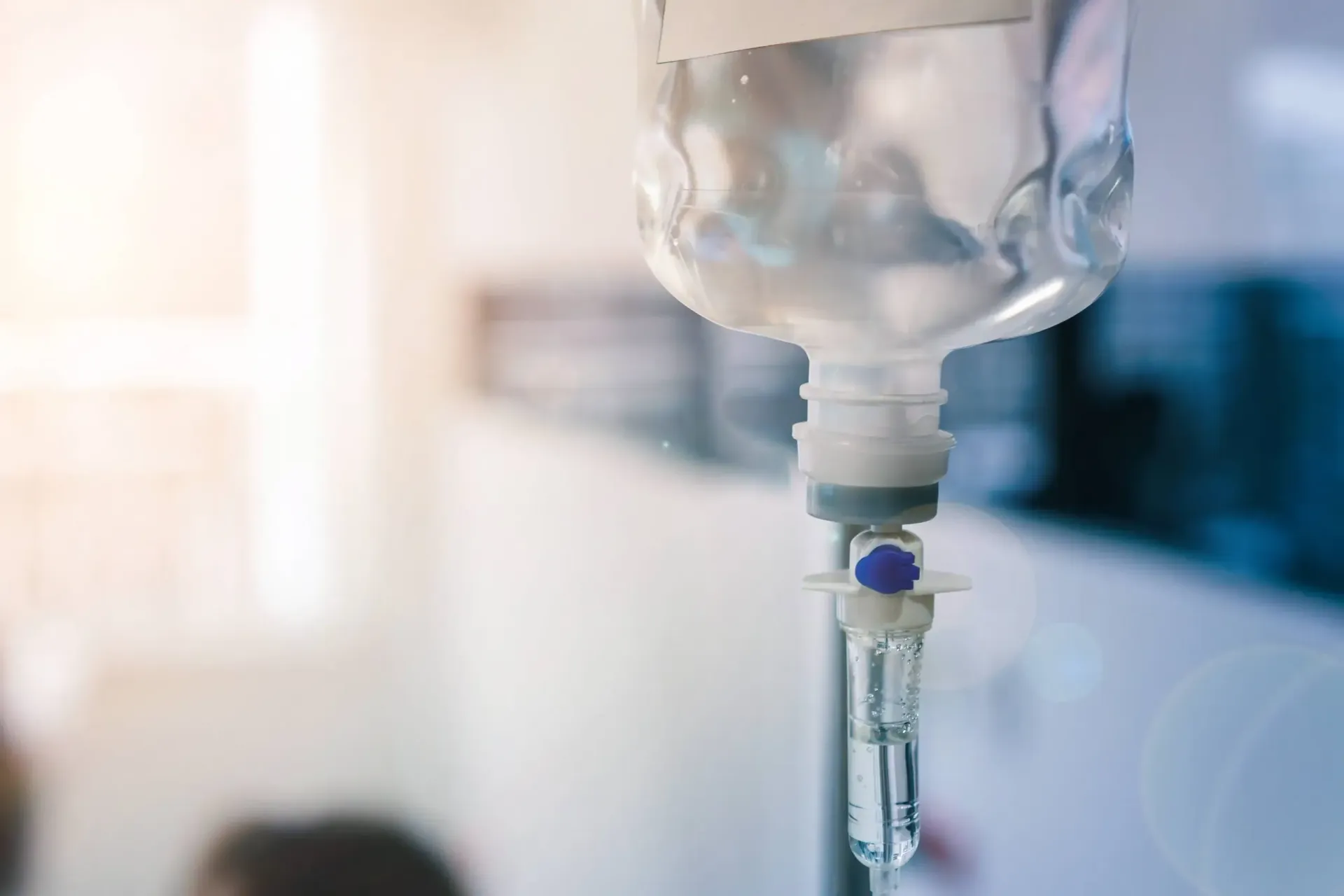
It's an intravenous infusion that delivers a recovery-focused blend in a saline base, run through a small catheter in your arm over roughly 30 to 60 minutes. You sit, you relax, and the fluid and nutrients go straight into your bloodstream.
The reason athletes reach for an IV instead of a sports drink comes down to absorption. Swallow electrolytes and vitamins and your gut decides how much actually gets through, a process that slows when you're nauseated, cramping, or wrecked after a long effort. An IV skips that step and puts fluid and nutrients into circulation directly. That's the genuine mechanical advantage. It's also where the honesty has to start, because faster delivery is not the same thing as a bigger result.
What's inside, and what each ingredient does
Electrolytes. Sodium, potassium, magnesium, and chloride are what you lose in sweat, and they run muscle contraction, nerve signaling, and fluid balance. Replacing them alongside fluid is the most evidence-supported part of any athlete drip. This is the workhorse of the bag.
Vitamin B12 (cobalamin). B12 is essential for
red blood cell production and energy metabolism, and low B12 shows up as fatigue and poor stamina. Here's the catch worth knowing: topping up B12 reliably helps people who are actually low on it. In athletes who already have normal levels, extra B12 hasn't been shown to add horsepower. It supports the system; it doesn't supercharge it.
B-complex. The B vitamins (B1, B2, B3, B5, B6) are the cofactors your cells use to turn carbs, fat, and protein into usable energy. Same rule as B12: they're necessary for the machinery, and replacing them matters most when training volume, restrictive eating, or heavy sweating has left you short.
Glutathione. Your body's main intracellular antioxidant, built from three amino acids. Intense exercise floods muscle with reactive oxygen species, and glutathione is part of how the body buffers that oxidative stress. The interest is reasonable. The evidence that IV glutathione measurably speeds recovery or improves performance is still limited, and it isn't FDA-approved for athletic outcomes. We include it as antioxidant support, not as a guaranteed edge.
The honest part: what an IV can and can't do for performance
A drip is good at one thing above all: getting fluid and electrolytes into you fast when you're depleted. For most athletes, on a normal training day, oral hydration and real food do the same job. The American College of Sports Medicine has long held that drinking fluids works as well as an IV for routine rehydration in healthy people.
So where does the Competitive Edge actually earn its place? Specific situations: you're badly dehydrated and can't keep fluids down, you've finished a brutal event and want to compress recovery, you travel and compete on back-to-back days, or you're running low on the nutrients in the bag and want a fast reset. Outside those cases, an IV is a convenience and a comfort, not a shortcut to fitness you didn't train for. Anyone promising otherwise is selling the bag, not the science.
Before you book: the anti-doping rule competing athletes must know
This is the part most IV clinics skip, and it has ended careers. If you're a drug-tested athlete (NCAA, Olympic, professional, or any sport under the World Anti-Doping Code), WADA prohibits IV infusions over 100 mL in any 12-hour period, in and out of competition. That ban applies even when everything in the bag is legal, including plain saline and vitamins. A standard IV bag holds far more than 100 mL, so a recovery drip can be a rule violation on volume alone.
This is not theoretical. MMA fighter Jon Jones drew a one-year suspension in 2016 for IV fluids that broke the volume limit, even though the contents weren't banned substances. The only routine exceptions are IVs given during hospital treatment, surgery, or diagnostic procedures, or with an approved Therapeutic Use Exemption. If you compete under testing, talk to your sport's anti-doping authority before any IV, including this one. We will tell you the same thing at intake, because a Brodsky Hematology affiliate isn't going to let you walk into a violation.
If you're a recreational athlete, weekend competitor, or generally fit person not subject to drug testing, this rule doesn't apply to you.
What a session feels like
You'll complete a short intake covering your health history, medications, and goals, and a provider reviews it before anything starts. If you have kidney disease, heart failure, or a fluid-sensitive cardiac condition, we may modify or hold the infusion, because your body handles a fluid load differently. A provider checks your vitals, places a small catheter (a quick pinch), and starts the drip. Most people read or scroll through the 30 to 60 minutes. A faint vitamin taste or mild warmth is normal. Afterward the catheter comes out, a bandage goes on, and you're back to your day.
Who's a good fit, and who should hold off
A good candidate is a healthy athlete or active adult who's genuinely depleted, recovering from a hard effort, or stacking events and wants a fast, supervised reset. Talk to a physician first if you have kidney disease, heart failure or another fluid-sensitive condition, are pregnant or breastfeeding, or have allergies to any ingredient. And if you're a tested competitor, see the anti-doping section above before you book anything.
How often does it make sense?
There's no fixed schedule. Most people use a recovery drip situationally: after a race or tournament, during a heavy training block, or when travel and dehydration pile up. It's a tool for specific moments, not a standing subscription. A provider can help you decide whether it fits your training calendar at all, or whether dialing in your daily hydration and nutrition gets you most of the way for free.
Safety and side effects
Given by a licensed provider with sterile technique, IV therapy has a reasonable safety profile, but it isn't zero-risk. You might notice warmth or flushing during the drip, a metallic or vitamin taste, or bruising and tenderness at the IV site. Lightheadedness can happen if the drip runs too fast. Rare risks include allergic reactions and, if technique is poor, infection. The single biggest safety variable is who's running the line, which is exactly why physician oversight matters here.
Frequently asked questions
How much is the Competitive Edge and how long does it take? $300, and about 30 to 60 minutes for the infusion plus a little time for intake and IV placement.
Will it boost my performance? It supports recovery and rehydration, which can help you train again sooner. It won't manufacture fitness or endurance you haven't built. The strongest, best-proven benefit is replacing fluid and electrolytes when you're depleted.
I get drug tested. Can I get this drip? Not without checking your anti-doping rules first. IV volumes over 100 mL per 12 hours are prohibited for tested athletes regardless of what's in the bag. Talk to your sport's authority and our team before booking.
Is it FDA-approved? The individual ingredients are approved pharmaceutical products, but a compounded recovery infusion isn't FDA-approved to treat or enhance any condition or athletic outcome. It's a wellness therapy.
Can I drive afterward? Usually yes. If it's your first infusion or you felt lightheaded, rest a few minutes first.
Ready to recover smarter?
The Competitive Edge is one option on NextGEN's wellness infusion menu, delivered in a calm outpatient setting in Nottingham, MD with the clinical oversight of a Brodsky Hematology affiliate. No hospital-style waits, no inflated promises, just supervised IV therapy with straight answers about what it will and won't do. If you want to find out whether it fits your training, reach out to our team or call 410-653-4002.
This information is educational and not medical advice. Some therapies discussed are not FDA-approved to diagnose, treat, cure, or prevent disease or to enhance athletic performance. Competing athletes are responsible for compliance with their anti-doping rules. Always consult a qualified healthcare professional before starting any new wellness protocol.
Recent Posts

How Long Do You Have to Take Blood Thinners After a Blood Clot? A Hematologist Explains the Decision